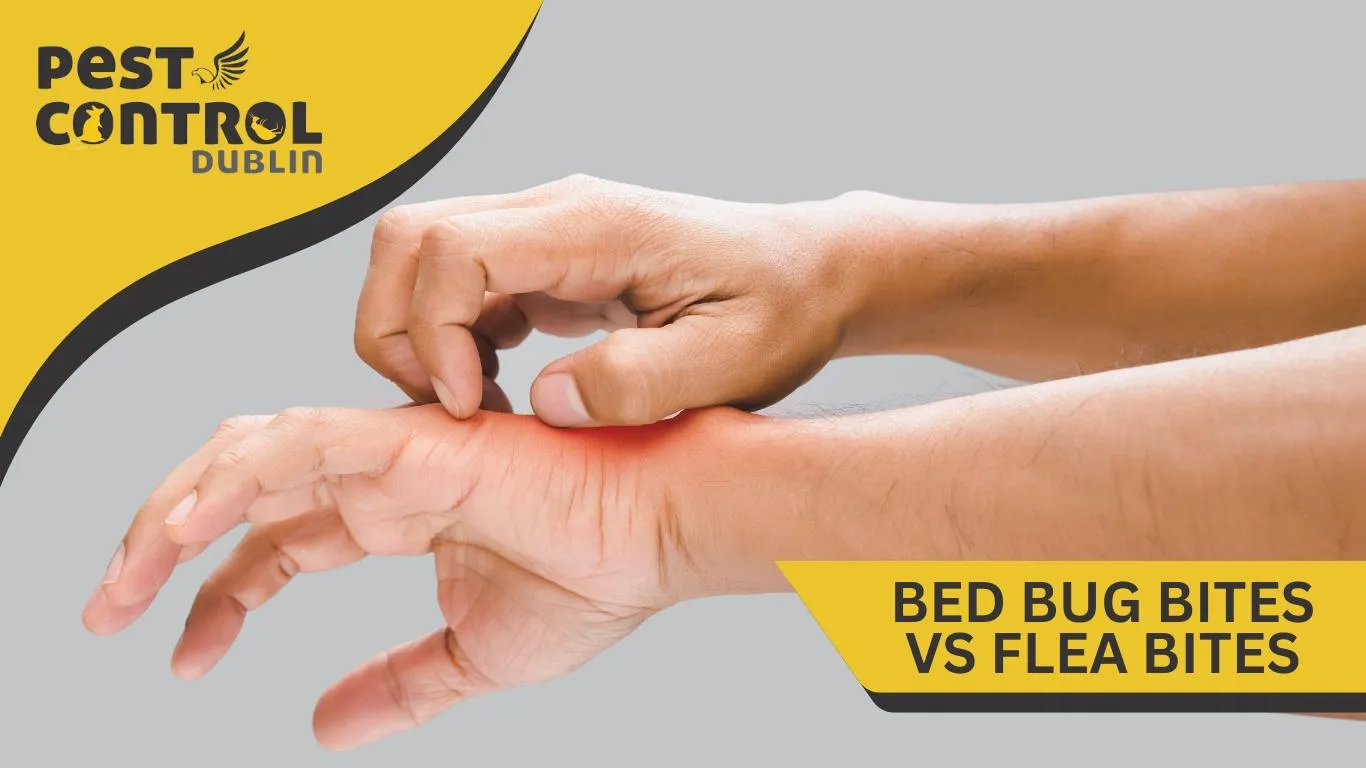
Waking up with itchy bites is never pleasant. But when those red bumps appear, the big question quickly follows: are they bed bug bites or flea bites?
Understanding the difference between bed bug bites vs flea bites is essential if you want to treat the affected area properly and, more importantly, rid your home of the real culprit.
In Dublin homes, we regularly see confusion between bed bug bites and flea bites. Both are caused by tiny insects that feed on blood. Both can leave itchy welts, red bumps and multiple bites on exposed skin. And both can quickly lead to a larger infestation if ignored.
However, there are key differences in how these insects behave, where they feed, and the bite marks they leave behind. Knowing how to distinguish bed bug bites from flea bites helps you act quickly and choose the right pest management solution.
What Are Bed Bug Bites?
Bed bugs are small, oval-shaped, reddish-brown insects that feed on human blood. They usually begin biting while you sleep, hiding in proximity to sleeping areas such as the bed frame, mattress seams and headboards.
Bed bug bites often appear on the upper body, arms, shoulders, and sometimes the face. These are areas of exposed skin during sleep. The bite marks are commonly arranged in a straight line or small clusters. This pattern is one of the easiest ways to distinguish between bed bug and flea bites.
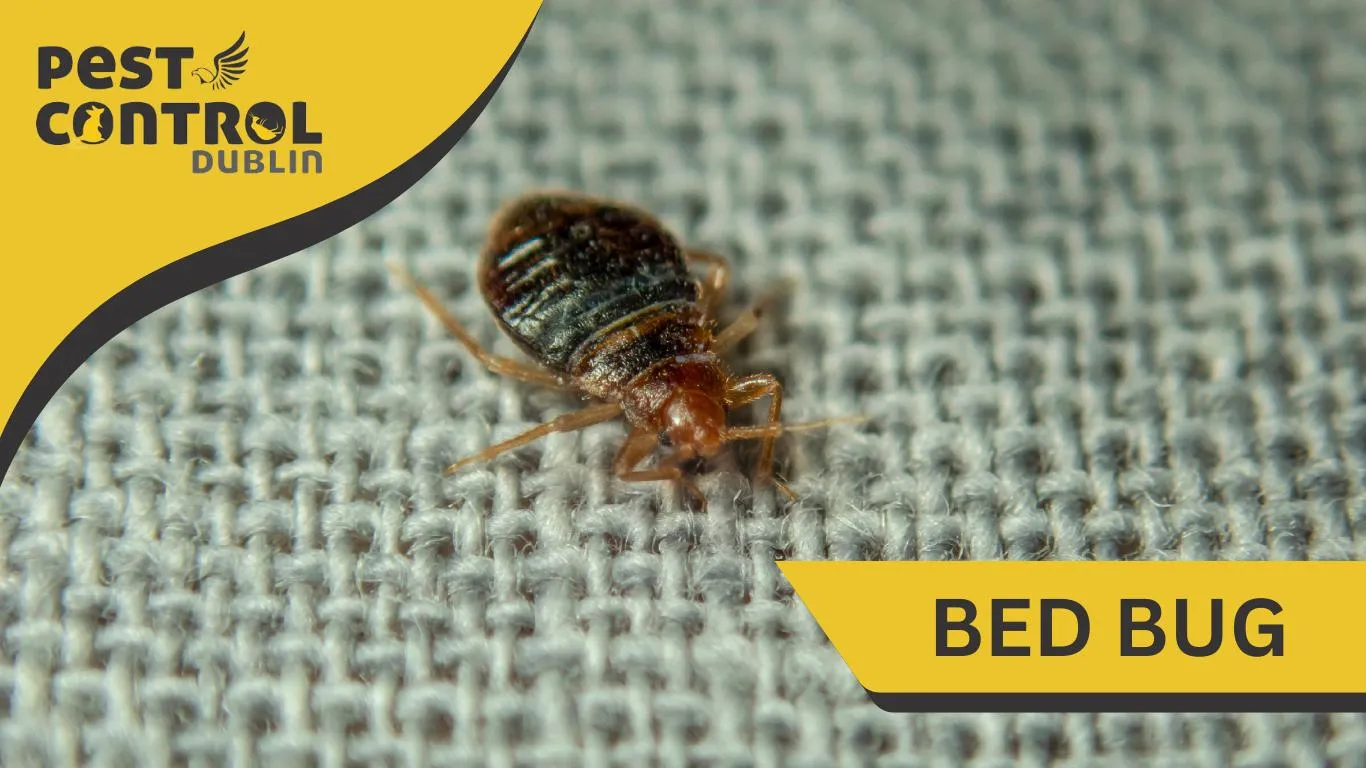
Bedbug bites tend to look like red welts or itchy bumps with a dark red centre. Some people develop an allergic reaction, while others show minimal bite symptoms. According to dermatology association guidance and comments from assistant clinical professors in infectious disease control, reactions vary widely depending on an individual’s skin sensitivity and prior exposure.
Bed bugs do not typically spread disease, but scratching can cause infection. It is important to avoid scratching and keep the bite area clean to prevent infection. In some cases, a topical steroid may be recommended for severe itching.
Further reading: Bed Bug Extermination & Treatment Dublin
What Are Flea Bites?
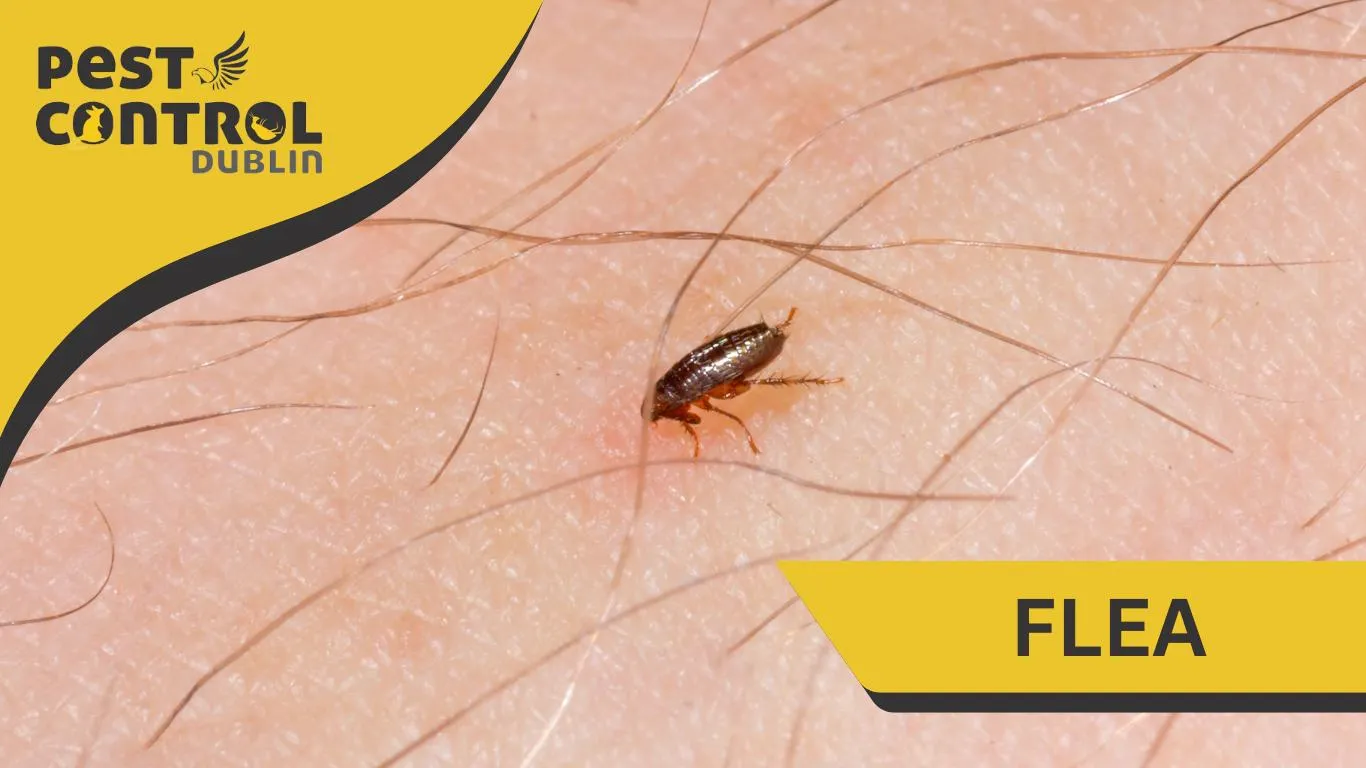
Fleas are also tiny insects, but unlike bed bugs, they usually enter homes through pets such as cats and dogs. Fleas prefer feeding on pets, but they will bite humans when necessary.
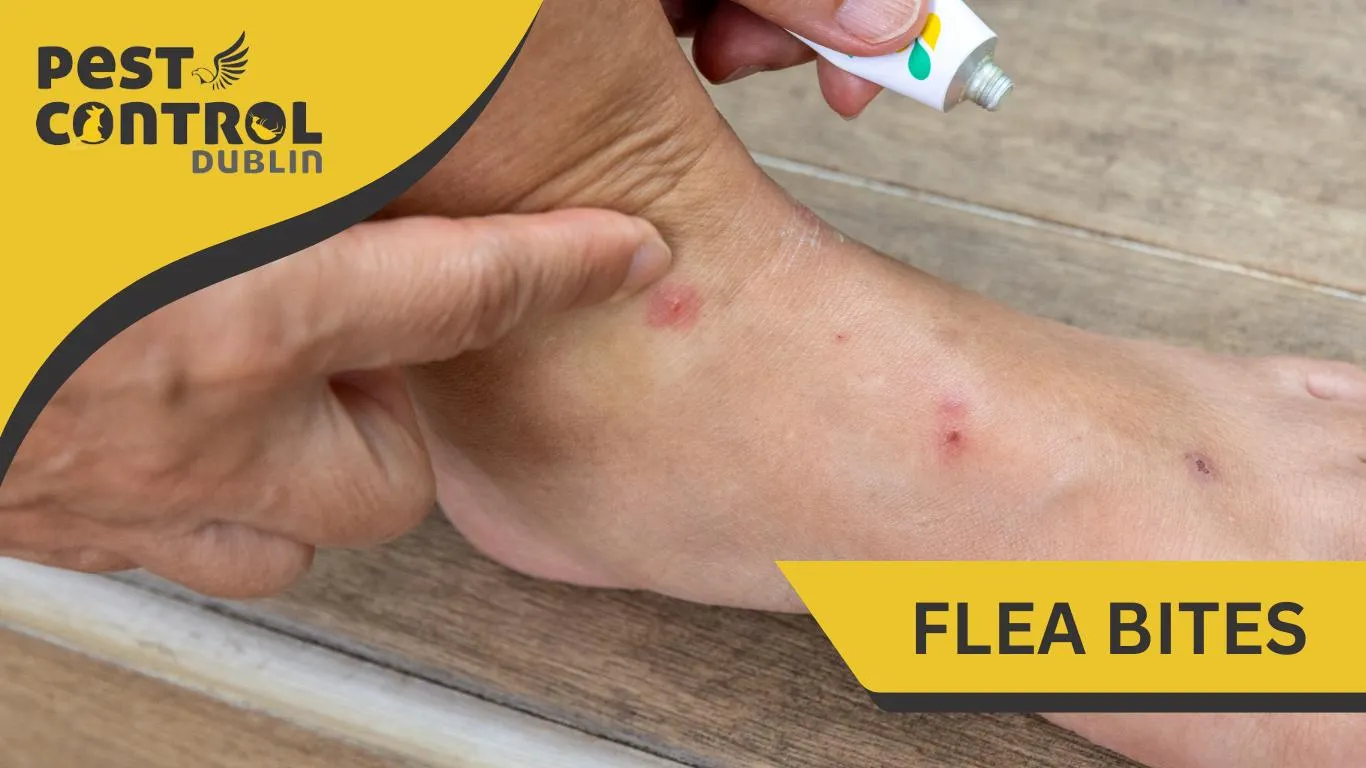
Flea bites are most commonly found on the lower body, particularly the feet and lower legs. This is because fleas jump from carpets or pet bedding and bite humans as they walk past. If you notice itchy bites concentrated around the ankles and lower legs, you may be dealing with a flea infestation.
Flea bites often appear as small dots or red bumps surrounded by a slightly swollen area. They may form multiple bites in random patterns rather than a straight line. Both fleas and bed bugs cause itchy welts, but the location of the bites relative to the sleeping area is a strong clue.
Unlike bed bugs, fleas can spread disease in certain circumstances. Historically, fleas have been linked to serious illnesses. While modern Ireland has strong disease control systems in place, a flea infestation should still be addressed quickly.
Further reading: How to Choose the Right Pest Control Company in Dublin
Bed Bug Bites vs Flea Bites: Key Differences
When comparing bed bug bites to flea bites, several important factors should be considered.
- Bed bugs feed at night and target exposed skin while you sleep. Fleas bite at any time and often target the lower legs.
- Bed bug bites often appear in a straight line, while flea bites are more scattered.
- Bed bugs hide in the bed frame and mattress. Fleas are commonly found in carpets, pet bedding and areas where pets rest.
- If you are trying to identify flea activity, look for flea dirt in pet bedding or on your pets themselves. Flea dirt looks like tiny black specks. In contrast, signs of a bed bug infestation include small blood stains on sheets, shed skins and live bugs hiding in the bed.
If you are unsure how to tell the difference, it is always safer to seek expert advice.
If you suspect a bed bug infestation or flea infestation in your Dublin home
contact Pest Control Dublin today. As a professional pest control company with local expertise, we can inspect your property, identify the pests, and provide targeted treatment to quickly and safely eliminate the pests from your home.
Contact our team now or Call: 01-8310353Risk Factors and Why Infestations Happen
Certain risk factors increase the chances of both flea and bed bug issues. Travelling, staying in hotels, buying second-hand furniture or having pets all raise the likelihood of bringing pests into your home.
Bed bugs spread through luggage, clothing and furniture. They hide near beds and begin biting as soon as they detect a sleeping host. Fleas usually enter homes through cats and dogs and quickly lay eggs in carpets and soft furnishings.
An infestation can develop rapidly. Both fleas and bed bugs reproduce quickly, making early pest control intervention crucial.
Treatment and When to Seek Medical Attention
Most insect bites caused by fleas or bed bugs can be treated at home. Washing the skin, applying soothing creams and using a topical steroid can reduce itching. Keeping nails short and avoiding scratching helps prevent infection.
However, if you experience a severe allergic reaction, swelling beyond the bite area, or signs of infection such as pus or increasing redness, you should seek medical attention.
Treating the bites alone will not solve the root problem. To prevent bed bugs or eliminate fleas effectively, professional pest management is required. DIY solutions often fail to eliminate pests, especially in established infestations.
Protecting Your Home and Family
Preventing future issues involves:
- regularly inspecting sleeping areas
- thoroughly vacuuming carpets
- washing pet bedding at high temperatures
- monitoring pets for signs of fleas.
- for bed bugs, inspect the bed frame and mattress after travelling. Avoid bringing untreated second-hand furniture into your home.
Early detection is key to avoiding a widespread infestation.
Take Action Before It Gets Worse
Confusion around bed bug bites vs flea bites is common, but acting quickly makes all the difference. The longer pests remain undetected, the harder they are to eliminate.
If you are dealing with persistent itchy bites, unexplained red welts, or signs of pests in your home, do not wait. Pest Control Dublin provides professional pest control services across Dublin, helping homeowners and landlords regain peace of mind.
Contact our team today to book an inspection and let us identify the problem, provide effective treatment, and ensure your home is pest-free once again.

Helping Dublin stay pest-free for over 20 years. Friendly advice, expert solutions, every time.
FAQs
How can I tell the difference between bed bug bites and flea bites?
When comparing bed bug bites vs flea bites, location and pattern are the main clues. Bed bug bites usually appear on the upper body, arms or other exposed skin after sleep and often form a straight line or small clusters. Flea bites are more common on the feet and lower legs and tend to appear as scattered red bumps. Looking at where the bites appear and whether you have pets can help you tell the difference.
Do bed bugs or fleas spread disease?
Bed bugs do not typically spread disease, although their bites can cause itchy welts and, in some cases, an allergic reaction. Fleas, on the other hand, can spread disease in certain circumstances, particularly if there is a heavy flea infestation. Regardless of the pest involved, scratching insect bites can lead to infection, so it is important to avoid scratching and keep the affected area clean.
What do bed bug bites and flea bites look like?
Bed bug bites often look like red welts or itchy bumps with a darker red centre and may appear in a straight line. Flea bites are usually smaller red bumps, sometimes with a tiny central dot, and are commonly found on the lower body. Both can cause multiple bites and intense itching, but the bite marks and their location on the skin are key differences.
When should I contact a professional pest control company?
If you notice repeated bites, signs of a bed bug infestation in your sleeping areas, or evidence of fleas such as flea dirt in pet bedding, it is time to call a professional pest control company. Treating the bites alone will not rid your home of pests. A thorough inspection and a targeted pest management plan are essential to eliminate the infestation and prevent its return.