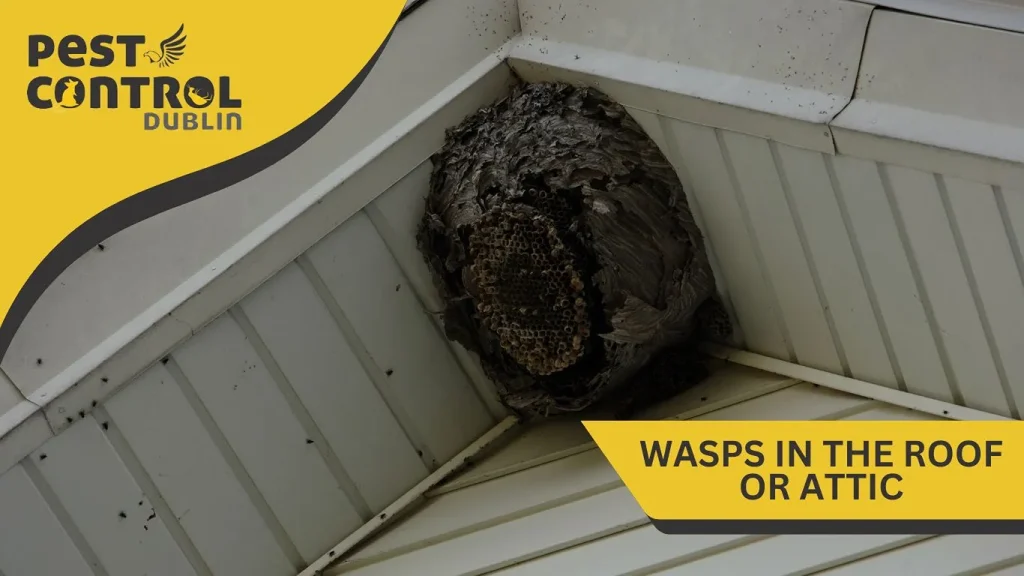
Wasps in the roof or attic should be assessed professionally when there is repeated activity around one entry point, buzzing inside the ceiling, wasps entering living areas, or a nest close to people. Hidden attic nests are difficult to reach, and disturbing or blocking an active nest can increase the risk of stings.
A single wasp near the roof does not automatically mean there is a nest. Several wasps entering and leaving the same gap every few minutes is a different story. They are probably not carrying out a detailed inspection of your fascia boards.
Why do wasps build nests in roofs and attics?
Roof spaces provide many of the conditions wasps seek when establishing a colony. They are sheltered from rain, relatively quiet, and protected from many predators.
Common nesting locations include:
gaps beneath roof tiles;
spaces behind fascia boards and soffits;
roof voids and eaves;
attic vents;
wall cavities adjoining the attic;
spaces around chimneys;
sheltered areas between rafters and insulation.
Queen wasps begin building new nests in spring. The first nest structure is small, but worker numbers increase through the warmer months, and the colony can grow considerably by late summer.
Wasp nests are made from wood fibres mixed with saliva, creating the familiar light grey or beige paper-like material. Large, mature colonies can contain several thousand wasps, although the number varies according to species, weather, location and the stage of the season.
Warning signs of wasps in the roof or attic
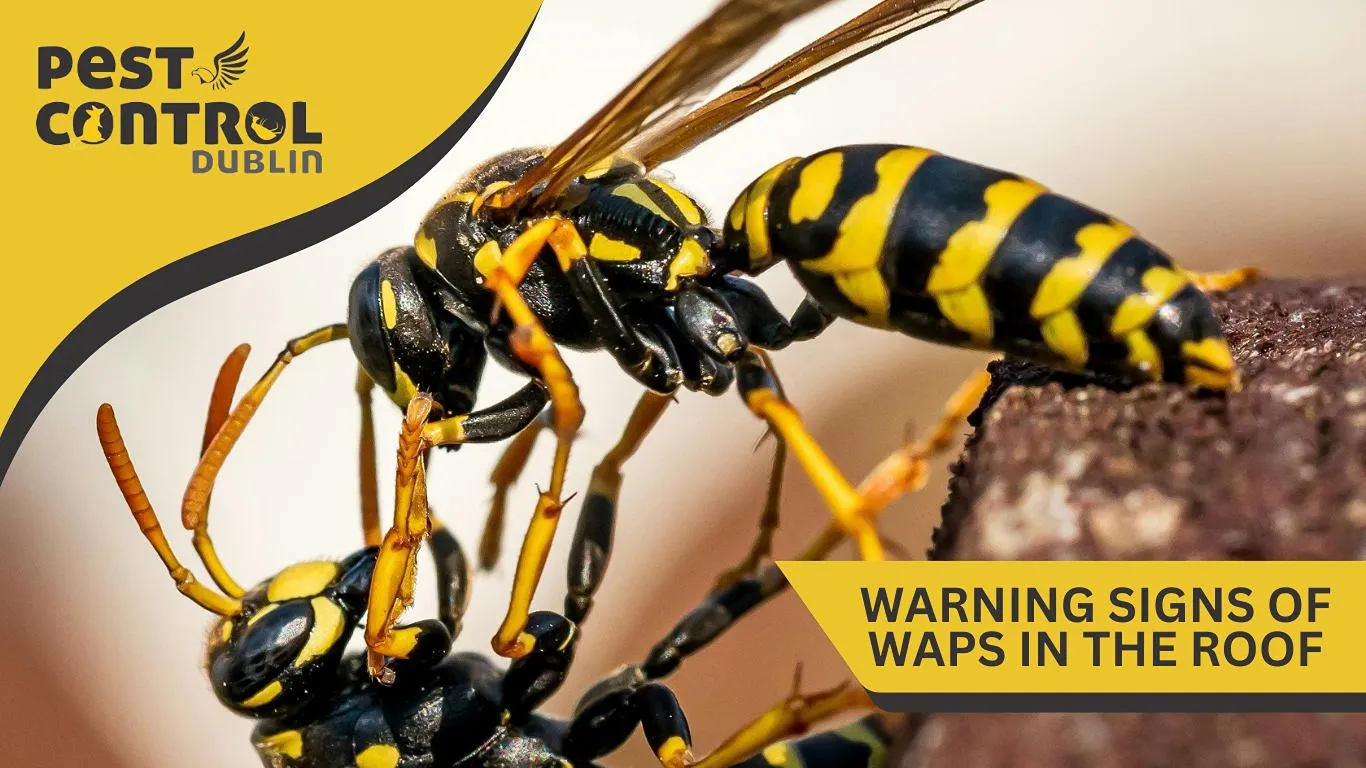
You may never see the full wasp nest. Attic nests are often hidden behind insulation, inside a roof void or beyond an opening that is difficult to inspect safely.
Wasps repeatedly using the same gap
The clearest sign is repeated wasp activity around one small opening.
Stand at a safe distance and watch the roof edges, eaves, vents and fascia boards. If you notice wasps entering and leaving the same gap throughout the day, an active nest is likely to be nearby.
Buzzing sounds above the ceiling
A quiet buzzing or scratching sound from the attic, ceiling or upper wall can indicate an active colony, particularly when it becomes more noticeable during the day.
Not every attic noise comes from wasps, of course. Birds, mice and other insects can also make themselves heard. The pattern of activity and a professional inspection can help identify the cause.
Wasps appearing in upstairs rooms
Wasps occasionally enter the house through attic hatches, recessed lights, ventilation systems or small openings around pipes and cables.
One stray wasp may simply have flown through a window. Finding several wasps upstairs, especially with windows closed, may point to a hidden nest in the attic space or adjoining roof void.
A visible paper-like nest
Exposed nests often look like grey or beige paper balls with layered patterns. Early nests can be very small, while an established nest in an unrestricted roof space may become much larger.
Do not approach or touch the nest to check whether it is active. Activity around the entrance is a much safer indicator.
Increased activity during warmer months
Wasp activity generally becomes more obvious as the colony develops through summer. Large numbers around the roof in late summer may indicate a well-established nest rather than a queen beginning a new one.
Further reading: Rodent Proofing Your Dublin Home Before BBQ Season: Essential Tips for a Pest-Free Summer
Are attic wasp nests more dangerous?
A nest in an attic is not automatically more aggressive than one in a garden. The problem is its location.
Roof and attic nests are often:
concealed behind insulation or building materials;
difficult to inspect without approaching closely;
positioned near narrow or unstable access areas;
connected to gaps leading towards living spaces;
harder to treat without suitable equipment.
Social wasps defend their colony and may sting repeatedly when the nest is disturbed. Working in a confined attic also gives a person fewer ways to move away safely.
The risk is greater where children, pets or anyone with a known allergy may be exposed. Wasp stings usually cause temporary pain and swelling, but they can occasionally trigger a serious allergic reaction such as anaphylaxis.
Can a wasp nest damage the roof or insulation?
Wasp nests do not normally cause the type of structural damage associated with rodents, woodworm or carpenter ants.
Wasps scrape fibres from weathered wood to make nest material, but they do not usually consume or excavate sound structural timber. A small amount of scraped wood on fences or sheds is therefore not evidence that the rafters are being eaten.
A large or poorly positioned nest may still:
disturb or compress a small area of insulation;
leave nest material or local staining;
obstruct access during roof maintenance;
be associated with damp marks where a nest is built inside a cavity;
reveal an existing gap or defect in the roof covering.
Piles of wood fragments or significant damage around rafters should not automatically be blamed on wasps. They may indicate another pest, decayed timber, or a separate building problem that needs inspection.
Claims that an ordinary wasp nest will seriously weaken a roof or routinely compromise indoor air quality are generally overstated. The immediate concern is the active colony and the risk of stings.
Do not seal an active entry point
Blocking the hole may seem like the quickest way to get rid of wasps in the roof. Unfortunately, it can create a second problem.
If the colony is still active, sealing its usual entrance may force wasps to search for another route. In roof voids and wall cavities, that alternative route can lead into the attic or living areas of the house.
The entrance should only be sealed after the colony has been professionally treated and activity has stopped. Guidance for hidden nests specifically warns against sealing an active opening because it may drive wasps indoors.
Avoid filling the gap, lifting roof tiles or disturbing insulation while wasps are still using the site.
Should you spray a hidden attic nest?
Aerosol spray directed towards a hole rarely confirms where the nest is or whether the treatment has reached the colony. It can also disturb wasps and encourage them to find another exit.
Hidden nests may require a targeted professional treatment selected for the location and nest structure. Pest control technicians can identify the entry point, assess whether the insects are wasps or bees, and choose an appropriate treatment without unnecessarily opening the roof space.
Insecticidal dusts are sometimes used for concealed nests because worker wasps can carry the treatment further into the colony. This should be handled by someone trained to use the product safely and correctly, particularly around insulation, electrical fittings and occupied rooms.
The right treatment depends on the property and the position of the nest, not on which can of spray happens to be closest to the garden shed.
When should you call pest control?
Professional treatment is the sensible option when:
wasps are repeatedly entering the same roof gap;
you hear buzzing in an attic, wall or ceiling;
the nest is hidden behind insulation or roof materials;
wasps are entering bedrooms or other living areas;
reaching the nest would require a ladder or movement across an attic;
the nest is close to doors, windows, vents or a frequently used garden area;
there is a risk of multiple stings;
someone in the property has a known allergy to wasp stings;
you are unsure whether the insects are wasps, bees or another species.
Hidden nests inside buildings are more challenging to control, and professional treatment is generally recommended.
Pest Control Dublin provides professional wasp nest removal in Dublin for homes and businesses. A technician can inspect the activity, identify the likely nest location, and advise on the safest treatment.
What happens during professional wasp treatment?
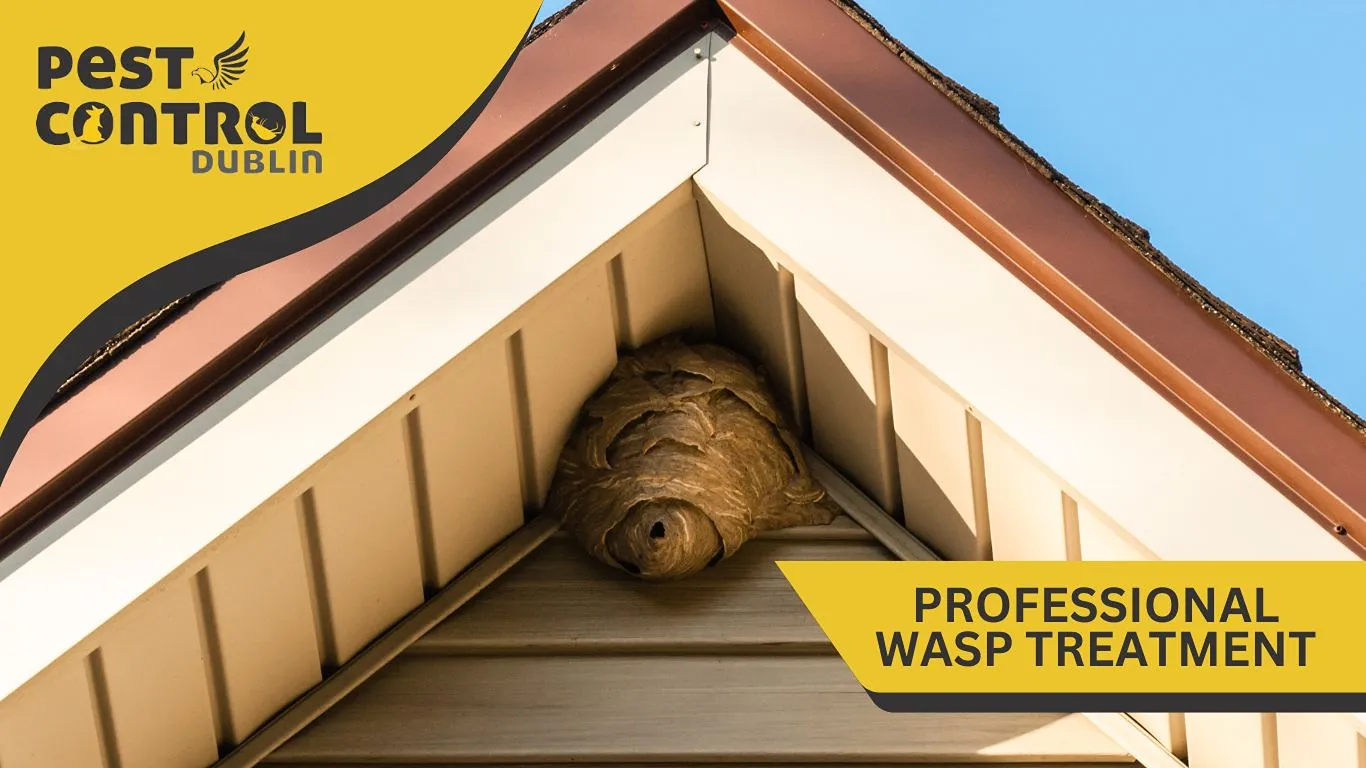
The technician will normally begin by observing the flight path and locating the main entry point. This is often more useful than searching through the entire attic and risking unnecessary disturbance.
The inspection may cover:
roof tiles and roof edges;
soffits and fascia boards;
attic vents and ventilation openings;
chimneys and flashing;
gaps around pipes or cables;
the accessible attic space;
signs of activity inside the property.
Treatment will depend on the nest location, accessibility and level of activity. In many cases, the nest itself does not need to be physically removed immediately. The priority is eliminating the active colony safely.
Wasps do not normally reuse an old nest the following year. However, a new queen may choose the same roof area if the shelter and entry points remain suitable.
How to prevent wasps nesting in the roof
Prevention work should be completed when there is no active colony.
Useful steps include:
repairing damaged or displaced roof tiles;
sealing suitable gaps around soffits and fascia boards;
fitting insect-resistant mesh to attic vents without restricting airflow;
repairing damaged vent screens;
checking flashing and openings around chimneys;
inspecting the roof in spring for early activity;
keeping outdoor bins closed;
clearing sugary food, fallen fruit and drink containers from the garden;
arranging repairs where repeated activity reveals a roof defect.
Do not block essential ventilation systems. Attic ventilation helps control moisture and should be maintained when screens or proofing materials are installed.
Peppermint oil and other natural repellents are frequently suggested online, but they should not be relied upon to prevent or eliminate an established wasp nest.
For more seasonal advice, read our guide to spring wasps in Dublin.
What if the attic has gone quiet?
A quiet nest during autumn or winter may be inactive. Social wasp colonies normally last for one season. The workers and old queen die, while new queens leave to find sheltered places where they can overwinter.
Old nests are not normally recolonised. A new nest can still be built nearby in a later season if the same access gaps remain open.
Before removing an old nest or sealing the entrance, make sure there is genuinely no activity. If there is any doubt, arrange an inspection rather than discovering the answer halfway through the job.
Need help with wasps in a Dublin attic or roof?
If you notice wasps entering the same roof gap, hear buzzing above the ceiling or find insects appearing inside the house, avoid disturbing the area.
With more than 25 years of local experience, Pest Control Dublin can inspect the property, identify the likely nest location, and carry out professional treatment where required.
Contact Pest Control Dublin for practical advice or to arrange an inspection.