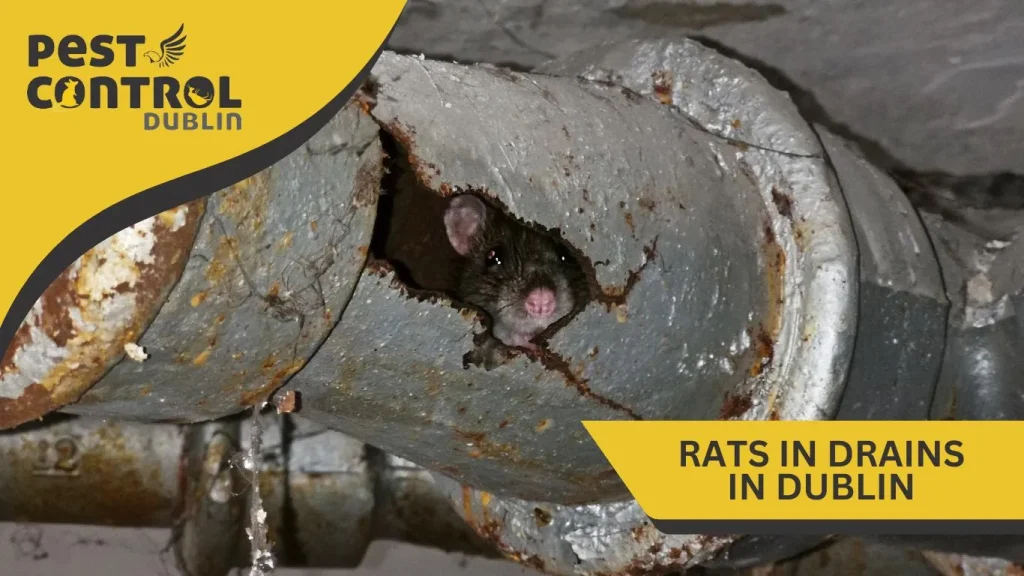
Rats in drains are a common cause of repeat rat infestations in Dublin, especially where older pipes, broken drains, uncapped redundant lines or damaged inspection chambers give rats a route from the sewer into a property. A CCTV drain survey can identify hidden entry points, while repairs, sealing and rat flaps can help stop rats entering again.
If you have dealt with a rat problem once, only for the scratching, smell or droppings to come back a few weeks later, the issue may not be inside the kitchen at all. It may be under the floor, behind a wall or inside the drainage system.
Why rats use drains
Brown rats are well suited to drains and sewer systems. They are strong swimmers, good diggers and practical little opportunists. Drains provide shelter, moisture, hidden travel routes and, unfortunately, access to food sources if waste is available.
In Dublin, drainage-related rat problems may be encountered in:
- older terraced houses with ageing pipework
- properties with clay drains or shifted pipe joints
- homes with extensions where redundant pipes were not sealed properly
- apartment blocks with shared service ducts
- restaurants, cafés and takeaways with busy waste areas
- homes with gaps around pipes, vents or an external wall
- gardens where rats can burrow near damaged drains or inspection chambers
Rats do not need the front door. They are not waiting politely with a tiny suitcase. If there is a crack, hole, open pipe, damaged vent or weak entry point, they may investigate it.
Brown rat, black rat or mouse: what are you dealing with?
For a suspected drainage-related rat problem in Dublin, the species most likely to be considered is the brown rat, Rattus norvegicus, also known as the Norway rat or sewer rat. Brown rats are much larger than house mice and typically have grey-brown fur and a long, scaly tail.
The black rat, Rattus rattus, is far rarer in Ireland. According to Ireland’s National Parks and Wildlife Service, recent Irish records are restricted to Lambay Island off the Dublin coast. The species has historically been associated with human habitation and ports.
A house mouse is considerably smaller than a brown rat. Correct identification matters because droppings, access routes and patterns of activity can differ, and the most appropriate inspection or treatment depends on knowing which rodent is involved.
Signs that rats may be using drains
You may not see rats coming directly out of a drain. In many Dublin properties, the signs are more indirect. Some signs point to general rat activity, while others suggest the drainage system may be part of the problem.
Common signs of rat activity include:
- scratching, squeaking or scraping noises under floors, inside walls or near pipework
- rat droppings along skirtings, under kitchen units, in presses or near food storage
- a strong musky or ammonia-like smell, especially in enclosed areas
- gnaw marks on wood, plastic, packaging, pipes or cables
- disturbed insulation, debris or nesting material
Signs that may point more specifically to a drainage issue include:
- burrow holes in the ground near drains, walls, sheds or bins
- foul drain smells combined with rodent activity
- rats appearing near bathrooms, toilets, utility rooms or ground-floor kitchens
- activity under floors or close to pipe runs with no obvious external entry point
One sign on its own does not prove that rats are coming from the drains. However, if fresh droppings, noises, smells and repeated activity appear together, especially around ground-floor pipework or drainage areas, further investigation may be needed to check whether the drainage system is involved.
How rats enter homes through drainage systems
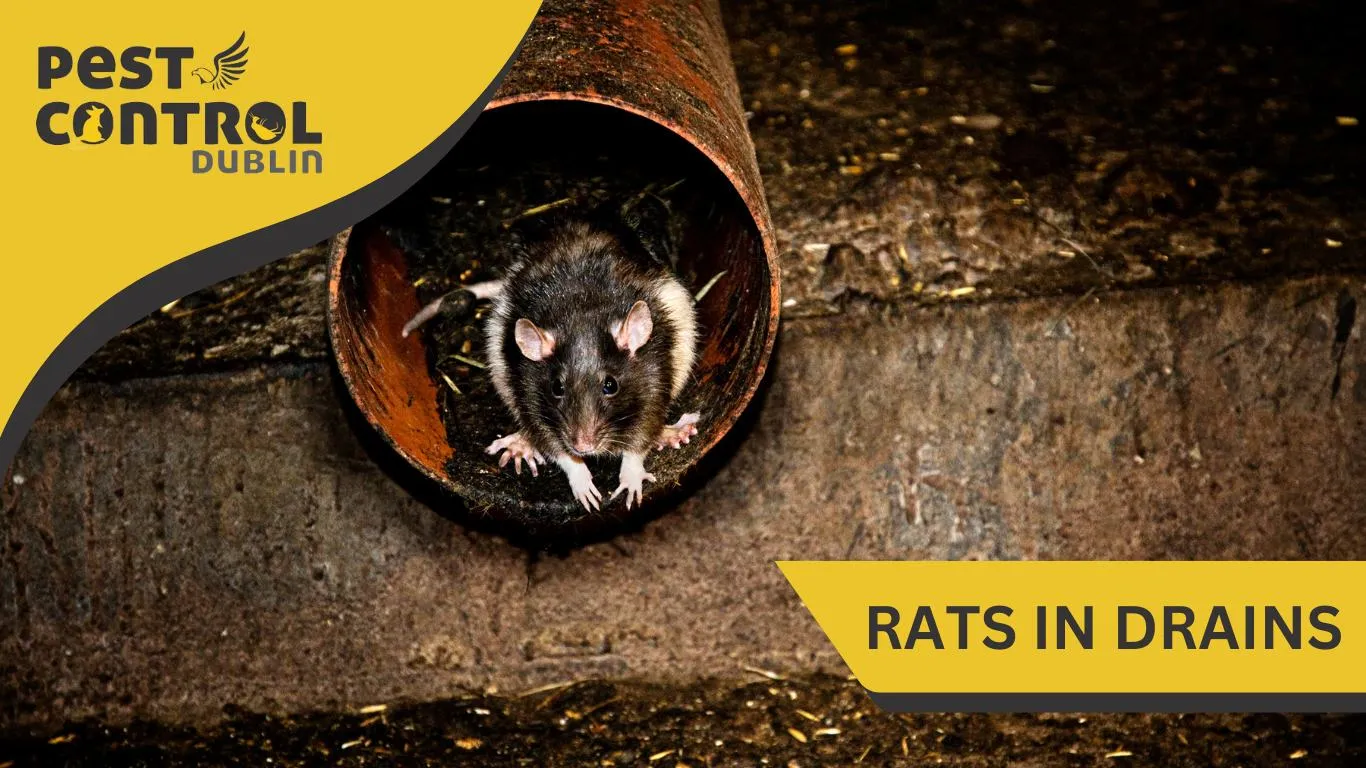
Rats can move through sewer systems and private drainage pipes. They may enter a building when there is a structural weakness that lets them leave the pipe network and access the property.
Common rodent entry points linked to drains include:
- cracked pipes
- displaced joints
- broken sewer pipes
- damaged inspection chambers
- uncapped redundant pipes
- gaps around pipework
- old or poorly sealed pipes
- damaged ventilation systems
- holes around an external wall
- gaps under floors or behind kitchen units
Once a rat finds a way out of the drainage system, it may travel through ground voids, wall cavities, pipe ducts or under floorboards. That is why a rat problem can seem to appear from nowhere. The entry point may be hidden below ground level.
In some cases, rats entering through drains will continue to return unless the damaged pipe or access point is found and repaired. Treatment can reduce activity, but proofing and drainage repairs are what help create a more permanent solution.
Why food waste makes the problem worse
Rats eat almost anything, including cereals, grains, food scraps, pet food, animal feed and waste. Flushing food waste or allowing fats, scraps and debris into drains can make plumbing systems more attractive to rodents.
Food waste should not be treated as “gone forever” once it disappears down a sink or toilet. In a drainage system, it can contribute to smells, blockages and food sources that encourage rat activity.
Useful prevention habits include:
- do not flush food waste down the toilet
- avoid washing food scraps into drains
- keep bins sealed
- store cereals, pet food and dry goods in closed containers
- clean up food debris around kitchens, bins and outdoor areas
- keep waste areas tidy, especially for commercial premises
For restaurants, cafes and food businesses in Dublin, this matters even more. Rodent activity can affect hygiene, staff confidence and customer trust, so early inspection is sensible.
Can rats really swim up through pipes?
Yes, rats are capable swimmers and can move through sewer systems. This does not mean every rat sighting comes from a toilet or drain, but it does mean drainage routes should be considered when rat activity is persistent or unexplained.
Toilet sightings are not common, but they can happen where the drainage layout and access conditions allow it. More often, rats leave the drain through a broken or poorly sealed section, then move into the structure of the building.
If you are seeing rats indoors without an obvious hole at ground level, the drains should be checked.
What a CCTV drain survey can show
A CCTV drain survey uses a drain camera to inspect the inside of pipes. For rat control, it can help identify hidden structural issues in the drainage system that would otherwise be difficult to see.
A CCTV survey may find:
- cracks in pipes
- collapsed or damaged sections
- open joints
- broken clay pipework
- redundant pipes that were not sealed
- rat burrow points
- debris, blockages or food build-up
- hidden rodent entry points
This is especially useful when rats keep returning after traps, baiting or standard pest control. If the real entry point is in the drain, the problem may continue until the defect is repaired.
Pest Control Dublin can inspect for rat activity and advise whether a drain camera inspection is needed as part of the wider pest control process.
Further reading: 5 Solutions for Rodent and Pest Problems in Dublin
Rat flaps and non-return valves
A rat flap or rat blocker is fitted inside a drain to help stop rats travelling upstream towards the property while still allowing waste water to flow out. Depending on the drainage system, other forms of non-return protection may also be considered.
Rat flaps can be useful where rats are travelling through a drainage system. However, they should not be treated as magic metal doors that solve every problem forever. If a drain is cracked, broken or badly damaged, the better long-term answer is usually to identify the defect and repair it.
In simple terms:
- A rat flap can help block access through a pipe
- Drain repairs can remove the structural route that rats are using
- Sealing and proofing help stop rats from entering through gaps around pipes, walls or vents
Used correctly, these measures can work together as part of a more complete rodent control plan.
What to do if you suspect rats in drains
If you suspect rats are entering through drains, the first step is not to panic and definitely not to start pouring random products down the pipework. That can cause more trouble than it solves.
A sensible approach is:
- Look for signs of rat activity
Check for droppings, smells, noises, gnaw marks, burrow holes and activity near drains or pipework. - Reduce food sources
Keep food stored, bins sealed and waste areas tidy. Avoid flushing food waste. - Do not rely only on traps
Traps may catch individual rats, but they will not repair a broken drain or seal an entry point. - Arrange a pest control inspection
A professional inspection can help determine whether you are dealing with rats, mice or another pest. - Consider a CCTV drain survey
If activity is repeated, hidden or linked to ground-floor pipework, a drain survey may be needed. - Repair and proof the property
Broken pipes, gaps around pipes, unsealed redundant lines and damaged vents should be repaired or sealed with suitable rodent-resistant materials such as metal, cement or properly applied waterproof concrete.
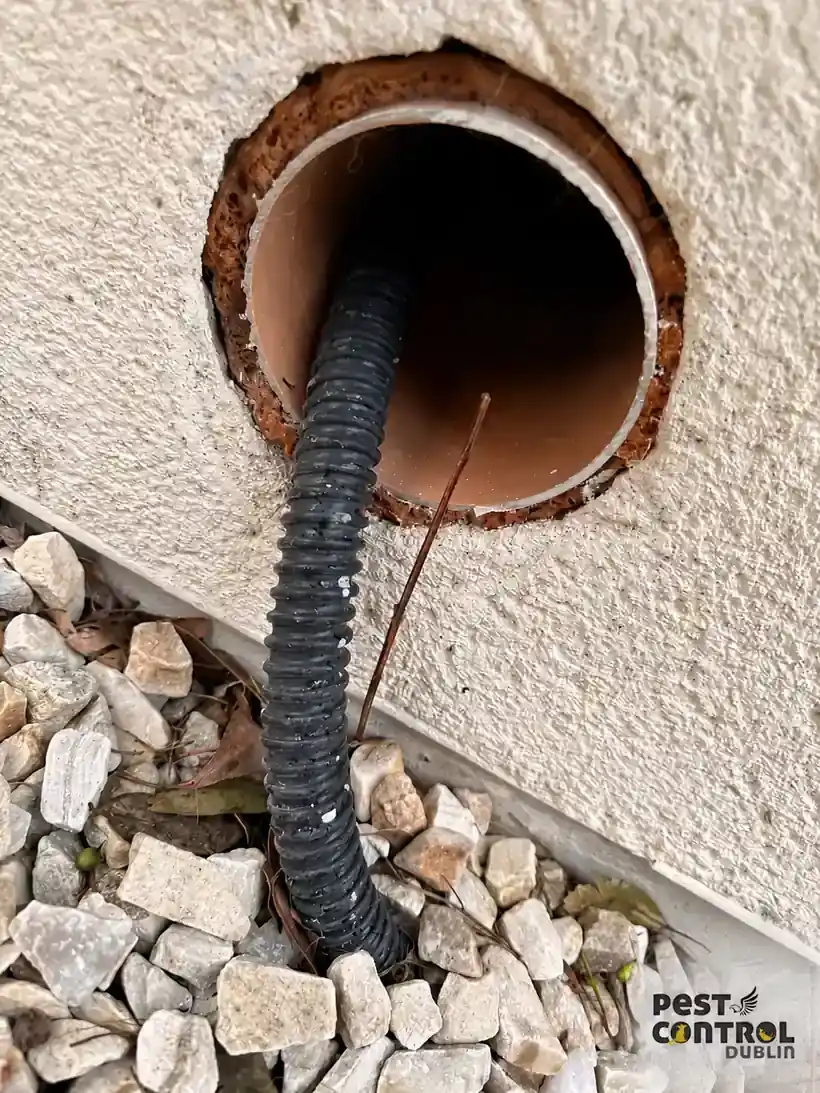
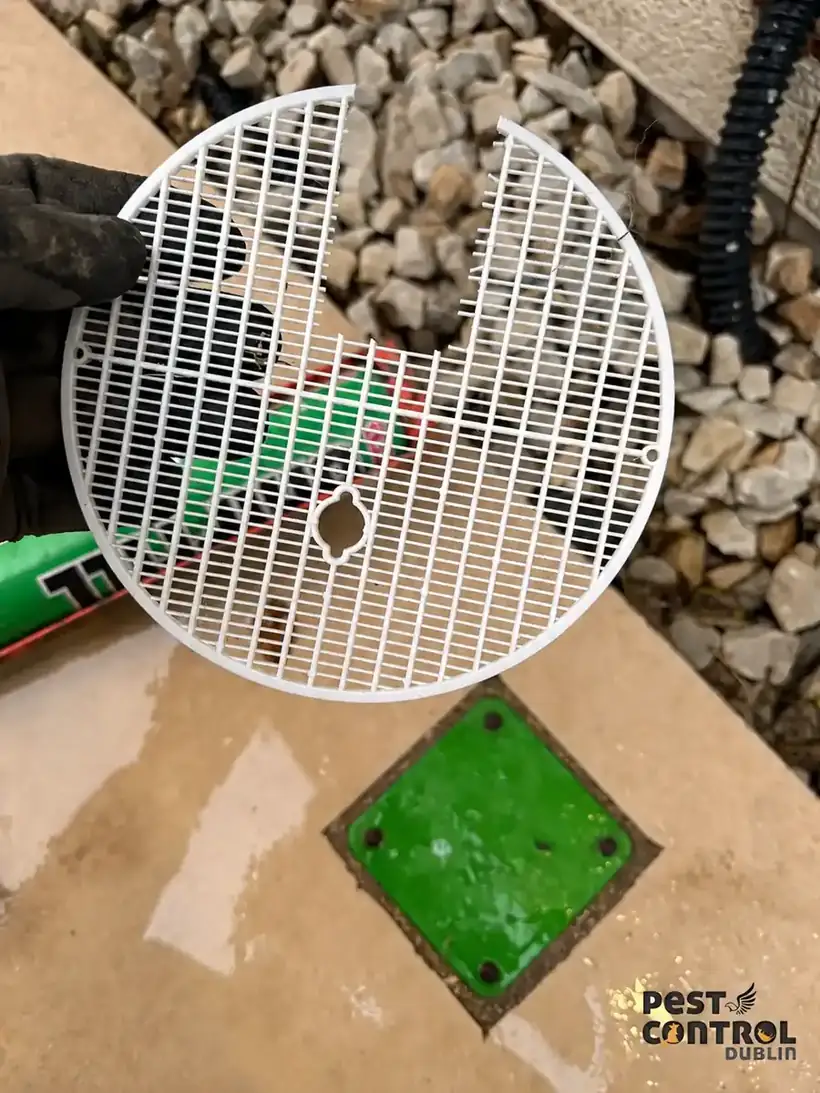
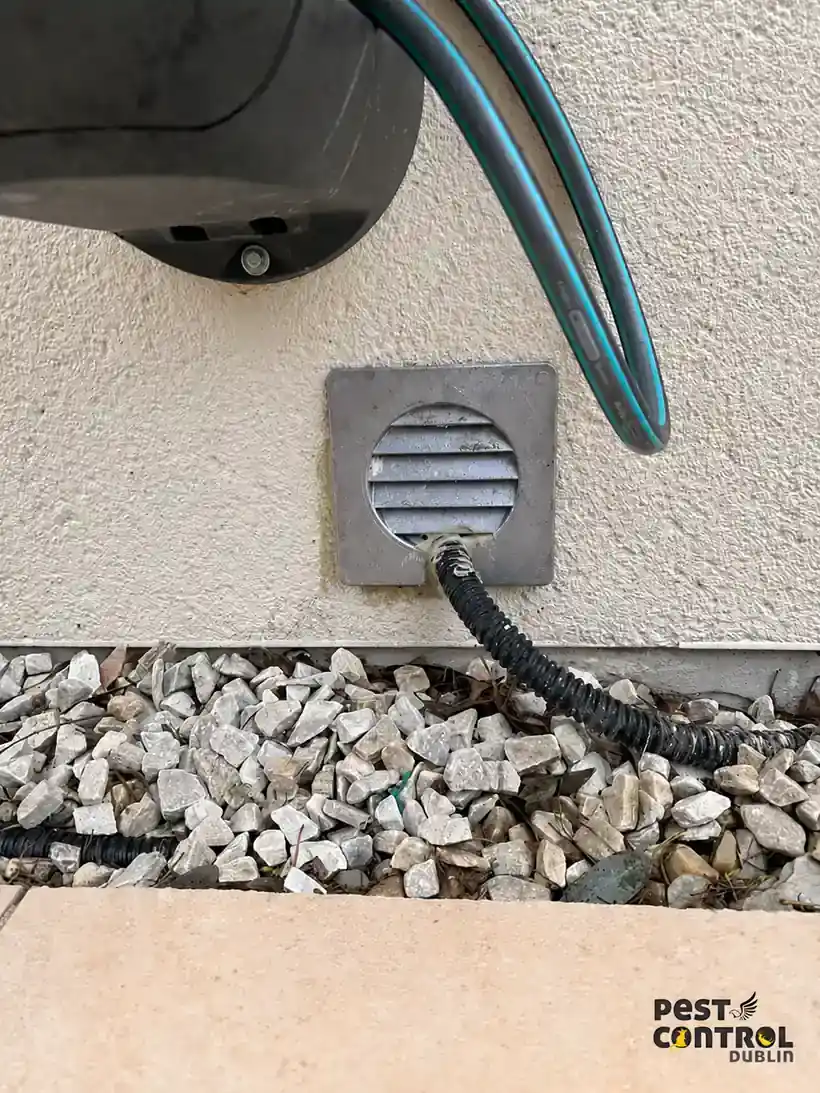
Example: sealing a rat entry point around an external wall vent
In this example from Pest Control Dublin, rats were entering through an external pipe and wall vent area. The property was treated with internal traps, external trap boxes and proofing work to seal the point of entry.