

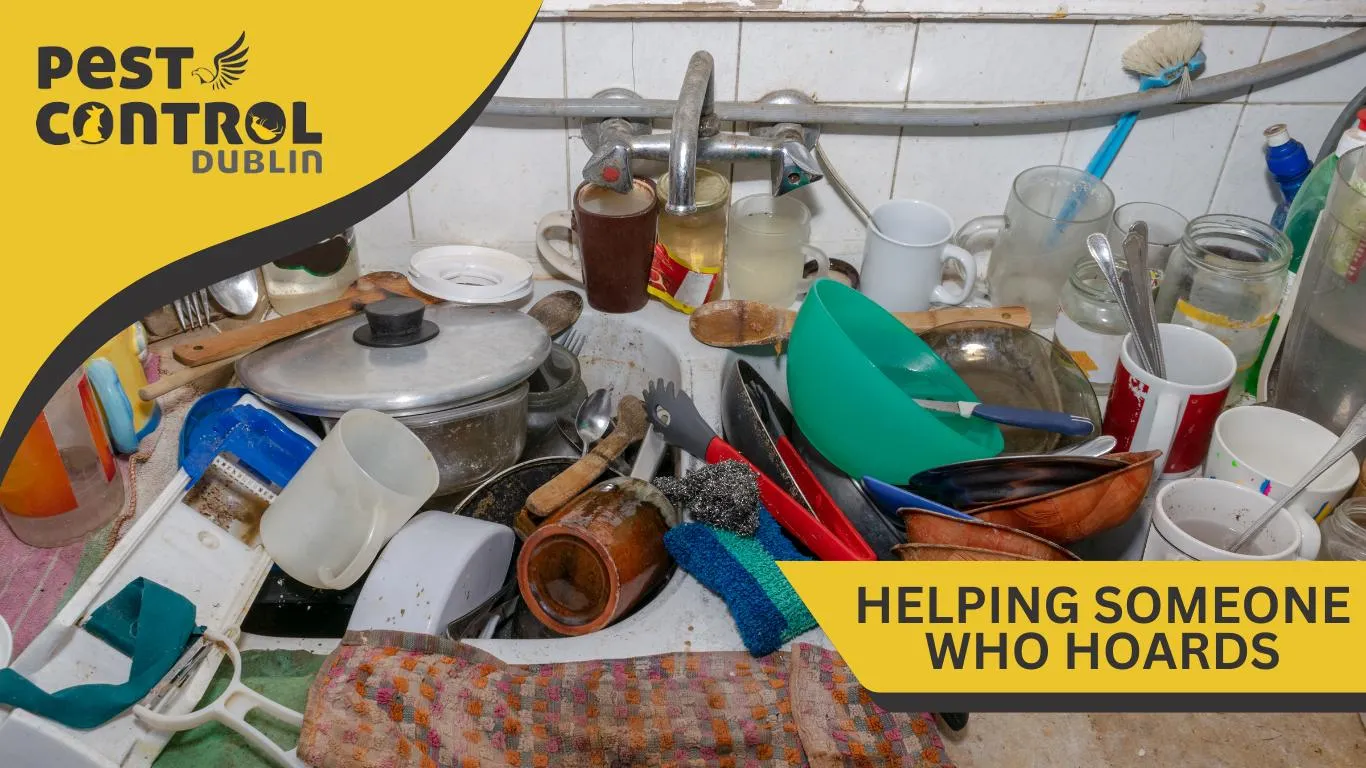
To help someone who hoards, begin with a calm conversation, listen without judgement and focus on one shared safety concern rather than the whole property. Do not remove belongings secretly or force a clear-out. Agree small priorities, encourage support from a GP, and involve a respectful cleaning team only when the person understands the plan.
Hoarding difficulties can be challenging for the whole family. You may be worried about safety, frustrated by rejected offers of help or unsure how to begin the conversation. The person may feel embarrassed, defensive or afraid that somebody will take control of their home.
Progress is more likely when the person feels heard and remains involved in decisions.
Understand Why the Conversation Can Be Difficult
The Health Service Executive’s guidance on hoarding disorder describes it as a strong urge to keep a large number of items, even when they are not needed or useful. The resulting clutter may become difficult to manage and can affect how safely or comfortably someone uses their home.
The possessions may have practical, emotional or sentimental meaning for the person. An item that appears disposable to one family member may feel important or irreplaceable to another.
A crowded home alone cannot confirm a diagnosis. That assessment should be made by a GP or another appropriate health professional. Families can raise concerns and offer support, but should avoid labelling or diagnosing the person themselves.
Start With a Calm, Private Conversation
Choose a time when nobody is already upset, under pressure or trying to move belongings. Avoid beginning the conversation during an argument or in front of neighbours, contractors or extended family members.
Ask permission to discuss the property and describe what you have observed. Focus on a specific concern rather than criticising the person or the entire home.
You could say:
- “I’m worried that the hallway is becoming difficult to use. Would you be willing to look at that area with me?”
- “Which part of the home would make daily life easier if it were more accessible?”
- “I’m not asking you to throw everything away. I’d like us to agree one safe next step.”
- “Would it help if we spoke to someone together before deciding what to do?”
Further reading: Hoarding Health Risks: Why Professional Cleaning is Essential
Try to listen without immediately proposing a complete solution. Asking what the person is most worried about may reveal concerns that are not obvious to the family.
Phrases that can damage trust include:
- “This is all rubbish.”
- “Why can’t you just get rid of things?”
- “If you do not clear it, I will.”
- “You have to let us empty the house.”
Even when said out of frustration, these comments can make the person feel threatened and less willing to accept help.
Focus on Safety, Not a Perfect Home
The first objective does not need to be an empty or perfectly organised property. A more realistic starting point is to identify what would make the home safer and easier to use.
Priorities might include:
- Creating a stable route to the main exit.
- Clearing items from stairs and handrails.
- Moving combustible materials away from cookers and heaters.
- Restoring access to the toilet, shower or sink.
- Making the bed or sleeping area usable.
- Allowing access to the fuse board, boiler controls or water shut-off.
- Arranging an inspection when there are signs of pests, leaks or damaged flooring.
In compact Dublin terraces and apartments, one narrow hallway may be the only route between a bedroom and the front door. In an upper-floor flat, shared corridors, stairs and access for emergency services may also need attention.
Our guide to hoarding-related health and safety risks explains the warning signs that should receive priority.
If there is an active fire, someone is trapped or part of the property appears likely to collapse, contact the emergency services instead of attempting to begin a clearance.
Do Not Throw Belongings Away Secretly
A surprise clearance may appear to solve the immediate problem, but it can cause considerable distress and damage trust between the person and their family.
The HSE advises families not to judge or pressure someone experiencing hoarding difficulties. Simply removing the possessions does not address the reason they accumulated and can lead to conflict or withdrawal from further support.
Unless there is an immediate emergency, avoid removing possessions without the person’s knowledge and agreement. This includes items that appear broken, expired or of little value.
A better approach is to agree simple categories such as:
- Keep.
- Review later.
- Donate.
- Recycle.
- Dispose of.
The person should understand how each category will be handled. Items placed in a review category should not later be removed without another conversation.
Agree Small and Measurable Steps
Looking at the whole property at once can feel overwhelming. Divide the work into small areas and agree what success will mean before starting.
For example, the aim of one session might be to:
- Clear enough space for a door to open fully.
- Make one section of the kitchen worktop usable.
- Restore access to the bathroom sink.
- Remove spoiled food from one cupboard.
- Create a safe route between the bed and the front door.
Set a time limit and a clear stopping point. A short, agreed session may be more productive than several hours of pressure and arguments.
Measure progress by how the space can be used, not only by the number of bags removed. Restoring access to a cooker, bathroom or exit is a meaningful improvement even when much of the property remains unchanged.
Concerned About a Hoarding Situation at Home?
If you are worried about a hoarding situation affecting safety, well-being, or everyday life, getting clear, professional guidance can make all the difference. A calm assessment and the right advice can help families understand next steps and avoid actions that may increase distress.
Contact our team now or Call: 01-8310353Let the Person Retain Control Where Possible
Hoarding difficulties often involve fear about losing possessions or control. Families can reduce that fear by explaining what will happen before anything is moved.
The person should be involved in decisions about:
- Which room or area receives attention first.
- Who may enter the property.
- Which possessions must not be touched.
- How private documents, photographs and sentimental items will be handled.
- Where items being kept will be placed.
- What will happen to anything marked for removal.
- When the work will stop or be reviewed.
There may be limits when a property is rented, shared with others or presents an immediate danger. Even then, communication should remain calm and respectful.
Further reading: Hoarding in Older Adults: Understanding the Challenges and Finding Support
Encourage Help From a GP or Health Professional
Professional cleaning can address the physical condition of a property, but it cannot diagnose or treat hoarding disorder.
Encourage the person to speak with their GP, particularly when the situation is affecting their health, mobility, relationships or ability to use essential parts of the home. Offering to help arrange the appointment or attend with them may make the first step easier.
If the person refuses support and the family remains seriously concerned, a relative can contact the GP to explain what they have observed and ask which support route may be appropriate. The GP may not be able to disclose the person’s private medical information, but the family can still communicate its concerns.
Where an older or disabled adult may be unable to protect themselves from serious harm, ask the GP or relevant health professional whether an HSE safeguarding referral should be considered.
Our article about hoarding in older adults discusses some of the additional mobility, isolation and support considerations that families may encounter.
To go further: Life After a Hoarding Cleanup: Relapse Prevention Checklist
Coordinate Support Within the Family
Different relatives may have different ideas about what should happen. One person may want an immediate clearance while another wants to avoid upsetting the person. Conflicting instructions can make the situation harder.
It can help to:
- Choose one relative as the main point of contact.
- Agree on respectful language before speaking with the person.
- Keep a record of any decisions about belongings.
- Avoid arguing about the property in front of the person.
- Separate urgent safety concerns from longer-term organising goals.
- Set reasonable boundaries around the time and practical help each relative can provide.
Family members also need to look after their own wellbeing. Supporting someone does not mean accepting unsafe behaviour, entering hazardous areas without protection or taking responsibility for every decision.
When Practical Clean-Up Support May Be Appropriate
A professional clean-up may be suitable when the person has agreed to practical work, the volume is beyond what the family can manage or the property contains hygiene, access or pest concerns.
The first step should usually be a survey rather than an immediate clearance. A survey can consider:
- Which rooms are affected.
- Access to the property.
- The volume and type of material.
- Items that must be protected or reviewed.
- Cleaning and disinfection requirements.
- Evidence of rodents or insects.
- Whether another specialist is needed.
Our guide to the professional hoarding clean-up process in Dublin explains how the survey, priorities and practical work can be planned.
A compassionate contractor should listen without judgement, explain the work clearly and agree how possessions will be handled. The team should not assume that everything is waste or begin removing personal belongings without an agreed process.
Pest Control Dublin provides discreet hoarding cleaning services in Dublin for individuals, families, landlords and property managers. Practical support can include agreed clearance, deep cleaning and pest control when evidence of an infestation is found.
Further reading: Hoarder Cleanup Process: What to Expect
Ready to Support Positive Change, Step by Step?
Helping a loved one manage hoarding behaviour takes patience, structure and the proper support. Speaking with experienced professionals can help you identify priorities, focus on specific spaces, and create a realistic plan that respects the person while encouraging progress.
Contact our team now or Call: 01-8310353Continue Supporting the Person After the Clean-Up
The end of the practical work should not be treated as the end of the support.
After access has been restored, families can help by agreeing manageable routines and checking whether the person is comfortable with how the space is being used. This might include a regular waste collection, a weekly check of one high-priority area or an agreed limit for new items entering the home.
Avoid repeatedly inspecting the property without permission. The aim is to support safer use of the home without making the person feel constantly monitored.
Our hoarding relapse prevention checklist provides practical ideas for maintaining access and recognising early warning signs after a clean-up.
Need Practical Guidance About a Dublin Property?
You do not need to have every decision made before asking for advice.
Pest Control Dublin can discuss the property situation in confidence, arrange a discreet survey and explain what practical cleaning or pest-control work may be possible. The priorities and handling of belongings can then be agreed before work begins.
For advice about hoarding disorder itself, speak with a GP or an appropriate health professional.
Call 01-8310353 to speak with the team.
Helping Dublin stay pest-free for over 20 years. Friendly advice, expert solutions, every time.
FAQs
What should I say to someone who hoards?
What if the person refuses help?
Can I throw away items that are clearly rubbish?
Can professional cleaning cure hoarding disorder?
We’re Here to Help — Request a Discreet Survey


I initially phoned Elaine to explain that I had wasps getting in between the wall and a wooden panel above my sitting room window. Elaine explained the dangers of trying to treat the problem myself and advised that it was much safer to leave it to the professionals. She also explained that the wasps had probably started building their nest around February and that, due to the very hot weather, I was now noticing a significant increase in activity.
I booked an appointment and Tony arrived exactly as arranged. He explained clearly what he was going to do and advised me to remain indoors for the following hour, as the wasps would become very active once the treatment was applied.
Tony put on all the necessary safety equipment and carried out the treatment. I honestly could not believe the number of wasps that were actually there! There is no way I would have been able to deal with them myself, regardless of how much wasp killer powder I used.
Tony was extremely professional and reassuring throughout the whole process. He even said he would call back the following day to check that the job had been successful, which I thought was excellent customer service.
A big thank you to Elaine and Tony for their professionalism, expertise, efficiency and excellent service. The problem was dealt with quickly and properly, and I now have peace of mind knowing it has been taken care of by professionals.
I would highly recommend Pest Control to anyone who has a wasp problem. Excellent service from start to finish! ⭐⭐⭐⭐⭐