Why ants in the kitchen keep coming back
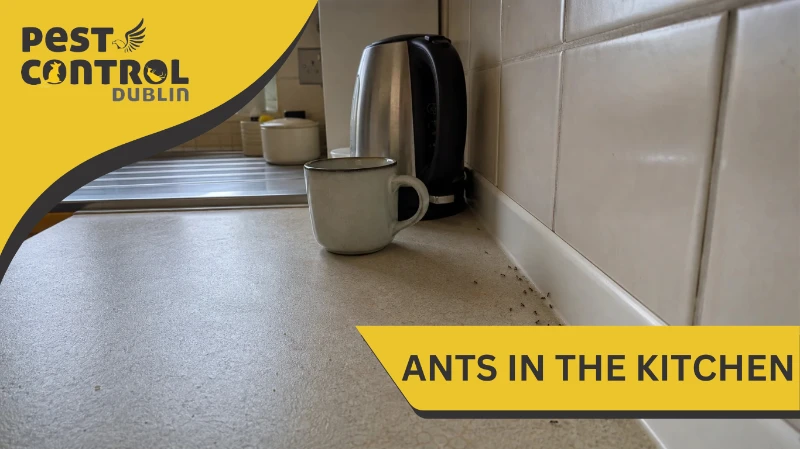
A few ants on the worktop in April or May does not always mean you have a serious infestation. But if the trail keeps coming back every morning, especially around the sink, bin, skirting board, pet bowl, or food press, there is usually a nest nearby and the visible ants are only part of the problem.
Ants in the kitchen in Dublin usually come back every spring because the colony becomes active again, workers start looking for food, and kitchens give them exactly what they want – warmth, crumbs, moisture, and easy hiding places. Once ants find food, they leave a pheromone trail, which is a chemical route other ants follow straight back to the same spot.
That is the bit people miss. You can wipe away the ants you see, and fair enough, nobody wants them crawling beside the kettle. But if the trail, food source, or nest is still there, more workers can appear the next day.
For full treatment options, see our ant control service in Dublin.
Why spring is when ants start showing up
Spring is when ant colonies wake up properly after the colder months. As the temperature rises, worker ants become more active and begin searching for food to support the queen, larvae, and growing colony.
In most Dublin homes, the usual culprit is the black garden ant. It is common in gardens, paths, walls, patios, lawns, and flower beds, so it does not have far to travel before it finds a route indoors. The National Biodiversity Data Centre lists Lasius niger, the small black ant, as using gardens, parks, grasslands, woodland edges, farmland, and brownfield areas – which explains why Dublin homes give it plenty of places to live nearby.
Kitchens are attractive because they offer three things at once:
- food, even tiny amounts;
- warmth, especially around appliances and pipework;
- moisture from sinks, dishwashers, leaks, and damp corners.
Ants do not need much. A few crumbs under the toaster, a sticky patch beside the bin, pet food left out overnight, or a small gap around a pipe can be enough to start regular activity.
What ants are looking for in your kitchen
Sugar gets most of the blame, and yes, sweet spills are a big draw. But ants are not fussy.
They can be attracted by:
- sugar, jam, fruit juice, honey, and soft drink spills;
- bread crumbs and cereal dust;
- grease around cookers and bins;
- pet food, especially if it sits out overnight;
- damp cloths, leaks, or condensation;
- food waste in bins or compost caddies.
Once a worker ant finds a reliable food source, it heads back and leaves a chemical route behind. Other ants follow it. Then more. That is why a kitchen can look fine one evening and have a neat little line of ants by breakfast.
Not dramatic. Just annoying.
How ants get into Dublin homes
Ants are small enough to use entry points you would barely notice. Gaps around external doors, cracks in brickwork, spaces around pipes, window frames, vents, damaged sealant, and tiny openings behind kitchen units can all become routes inside.
In terraced houses and apartments, the route can be less obvious. Ants may travel along shared walls, under floors, through service gaps, or from a courtyard, balcony, bin area, or planted pot. Potted plants can be a sneaky one too. If a nest is in the soil, the problem can arrive indoors without much warning.
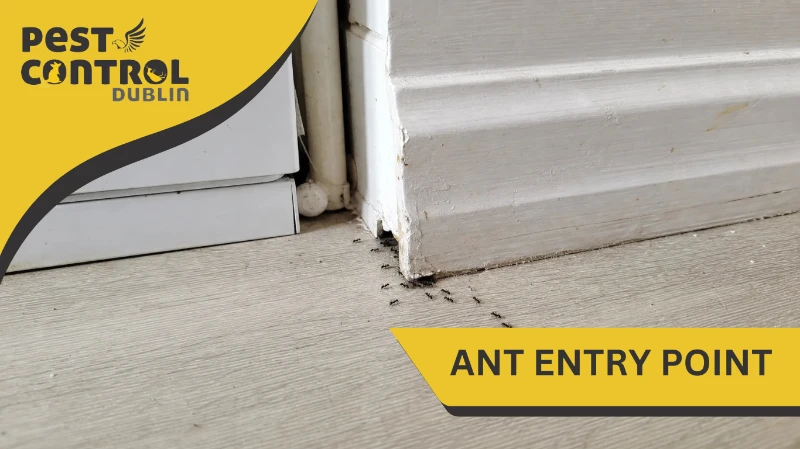
Once inside, ants often stay close to edges. Look along:
- skirting boards;
- kickboards under kitchen cabinets;
- the back of presses;
- pipe entries under the sink;
- dishwasher and washing machine gaps;
- door thresholds;
- cracks near patio doors.
If the same line appears again and again, do not just spray the middle of it and hope. Follow it as far as you can. The start and end of the trail tell you much more than the ants in the middle.
When DIY ant control helps
Some light ant activity can be improved with basic housekeeping and proofing. Start with the boring stuff. It works more often than people think.
Try this:
- Clean the trail with warm soapy water, especially along skirting boards and worktops.
- Store sugar, cereal, pet food, and open packets in sealed containers.
- Empty bins more often in warm weather.
- Do not leave pet bowls down overnight if ants are already active.
- Check for leaks under the sink and around appliances.
- Seal obvious gaps around pipes, windows, doors, and damaged silicone.
- Move potted plants away from kitchen doors and inspect the soil.
The goal is simple: remove the food, break the trail, and close the easiest route in.
Natural repellents like peppermint oil, vinegar, lemon juice, or diatomaceous earth may disrupt ants temporarily. They can help as a short-term barrier. But they do not always reach the nest, and that is where the real problem usually sits.
If you are using any pesticide product at home, use it carefully and follow the label. The EPA has guidance for household pesticide users, including advice around responsible use and protecting water from contamination.
Why ants often come back after sprays
Most DIY sprays kill the ants you can see. That feels like a win for a day or two.
Then the trail returns.
The reason is straightforward: worker ants are replaceable. If the queen and nest are still active, the colony can keep sending more ants out to forage. Spraying visible ants may also scatter activity, which makes the route harder to trace afterwards.
This matters even more if the ant species is not the usual black garden ant. Pharaoh ants, for example, are a different problem and can be more difficult to manage in warm buildings such as apartments, hospitals, food premises, and commercial sites. If they are disturbed incorrectly, the infestation can become harder to control.
That does not mean every ant in a kitchen is a crisis. It means repeated activity deserves a proper look.
Signs the nest may be nearby
You may be dealing with more than a casual visit if you notice:
- ants returning to the same spot after cleaning;
- trails running under kitchen units or into walls;
- ants appearing in several rooms;
- activity around drains, sinks, or damp areas;
- ants inside food presses;
- winged ants indoors during summer;
- recurring activity every spring.
Winged ants are a seasonal sign linked to mating flights. If that is what you are seeing, read our guide to flying ants in Dublin, because the timing and meaning are slightly different.
What Pest Control Dublin checks during an ant visit
A proper ant control visit is not just “spray and leave”. The useful work is in finding out what is happening.
Pest Control Dublin can inspect the property, identify likely entry points, check where the trails are travelling, and assess whether the nest is indoors, outdoors, or close to the building. The treatment plan depends on what is found.
In many ant jobs, baiting is more useful than chasing visible workers. Baits work because ants carry the treatment back towards the colony. That can target the source rather than just the ants walking across the kitchen tiles. The exact product and method should always depend on the property, the species, food areas, pets, children, and the level of activity.
Prevention matters as well. Proofing gaps, improving hygiene around food sources, managing moisture, and checking outdoor nest areas all reduce the chance of the same issue returning next spring.
For broader pest support, you can also see our Dublin pest control services.
Ants in commercial kitchens are a different issue
In a home, ants are frustrating. In a commercial kitchen, cafe, hotel, restaurant, nursing home, or food business, they are also a hygiene and reputation problem.
The approach should be more structured: inspection, records, proofing advice, treatment, and follow-up where needed. That is especially true if ants are appearing near food prep areas, stock rooms, staff kitchens, bins, or customer-facing spaces.
Pest Control Dublin provides commercial pest control services with documented visits and routine contract options. For food businesses, that paperwork can be just as important as the treatment itself.
How to keep ants out after treatment
Once the active trail is under control, keep the prevention simple:
- Wipe up sweet spills straight away.
- Keep pet food bowls clean.
- Rinse sticky recycling before storing it.
- Seal dry goods properly.
- Fix leaks and damp patches.
- Keep bins clean and closed.
- Watch patio doors and back doors in warm weather.
- Check the same route again after rain or a warm spell.
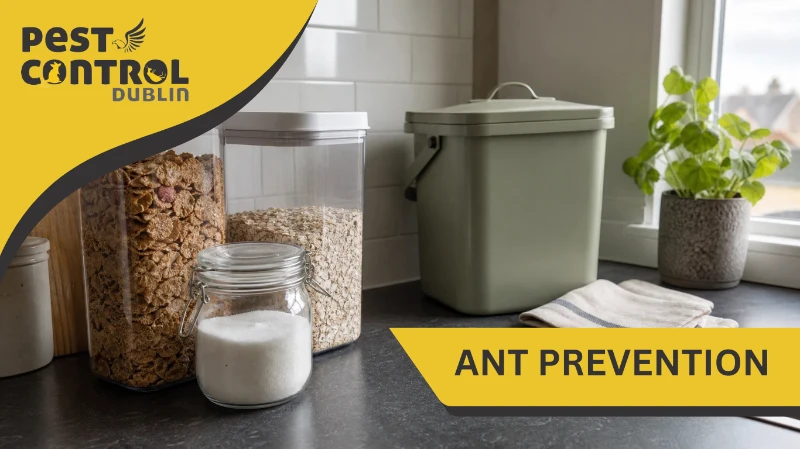
Ants are persistent, but they are also predictable. Food, moisture, warmth, and access – take those away and the kitchen becomes much less interesting to them.
Need help with ants in the kitchen?
If ants are coming back again and again, call Pest Control Dublin on 01-8310353 or 0857077496, or use the contact form. We can inspect the trail, look for the source, and advise on the right next step.